Structured data is code added to a page, usually JSON-LD using the schema.org vocabulary, that labels what the page is about: a product, its price, its reviews, the business behind it. Search engines use it to understand the page and may show rich results such as prices and star ratings.
Structured data is code added to a page, usually JSON-LD using the schema.org vocabulary, that labels what the page is about: a product, its price, its reviews, the business behind it. Search engines use it to understand the page and may show rich results such as prices and star ratings.
What does structured data mean?
Labels for machines. A shopper reads $148, in stock, 4.7 stars; a crawler sees text unless the page also says, in a fixed format, which number is the cost and which is the rating. Google’s introduction to structured data says it uses this markup to understand page content and to gather facts about the world, such as people, books and companies. Its search gallery lists 25 search features the markup can earn as of 18 October 2026, from product snippets to event listings. The vocabulary itself comes from schema.org, a shared dictionary of types and properties that the major search engines agreed on.
What are some structured data examples for stores?
4 types do most of the work: of the 25 features in Google’s gallery, these cover nearly every page a store has. Google supports 3 formats, JSON-LD, Microdata and RDFa, and recommends JSON-LD because it’s “the easiest solution for website owners to implement and maintain at scale”.
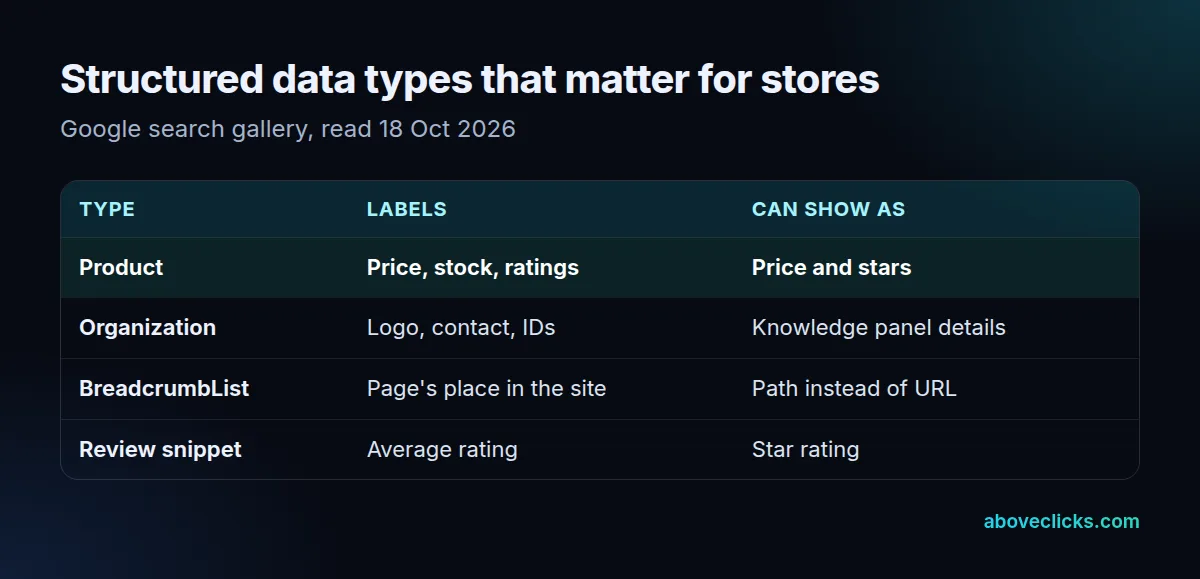
Product markup carries the most weight in a store. Our product schema markup guide covers which properties Google requires, and identifiers like a GTIN help Google match your item to the same product elsewhere.
Does schema markup help rankings?
Not directly. It helps Google understand a page and can earn enhanced listings, which can lift clicks: Google cites Nestlé measuring an 82% higher click-through rate on pages shown as rich results. But Google’s structured data guidelines say it doesn’t promise to show them, even when its own Rich Results Test passes the markup. The page may not be representative, or the markup may describe content hidden from users.
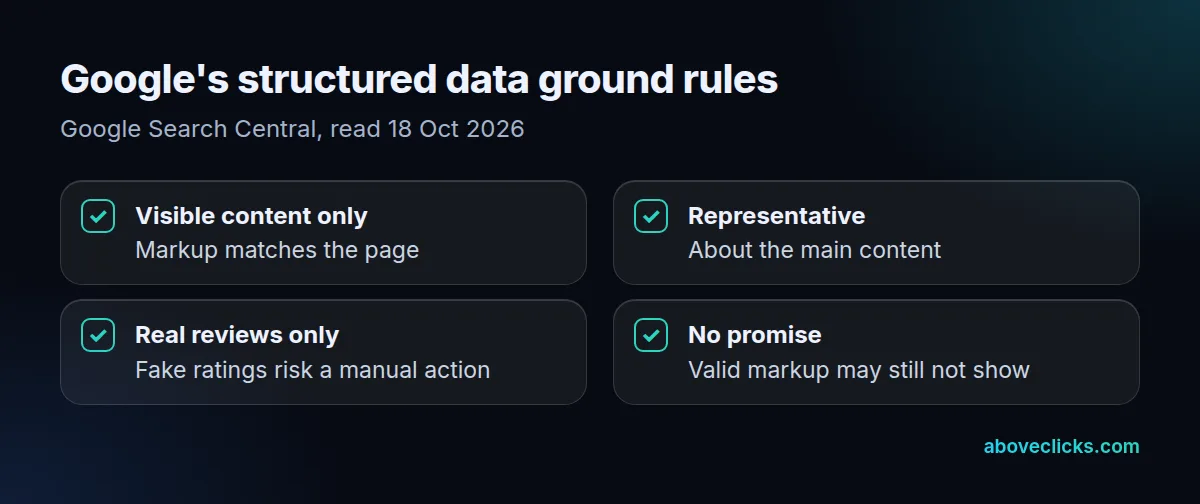
Breaking the rules costs eligibility, not position. Google says a structured data manual action means a page loses eligibility for enhanced listings; “it doesn’t affect how the page ranks in Google web search”. The common causes are markup for content shoppers can’t see and reviews that didn’t come from real customers.
What do real stores mark up?
The basics, with gaps. In our 18 October 2026 survey, 20 of 27 store homepages carried Organization markup, 16 had WebSite markup and 4 had no structured data in the raw HTML at all.
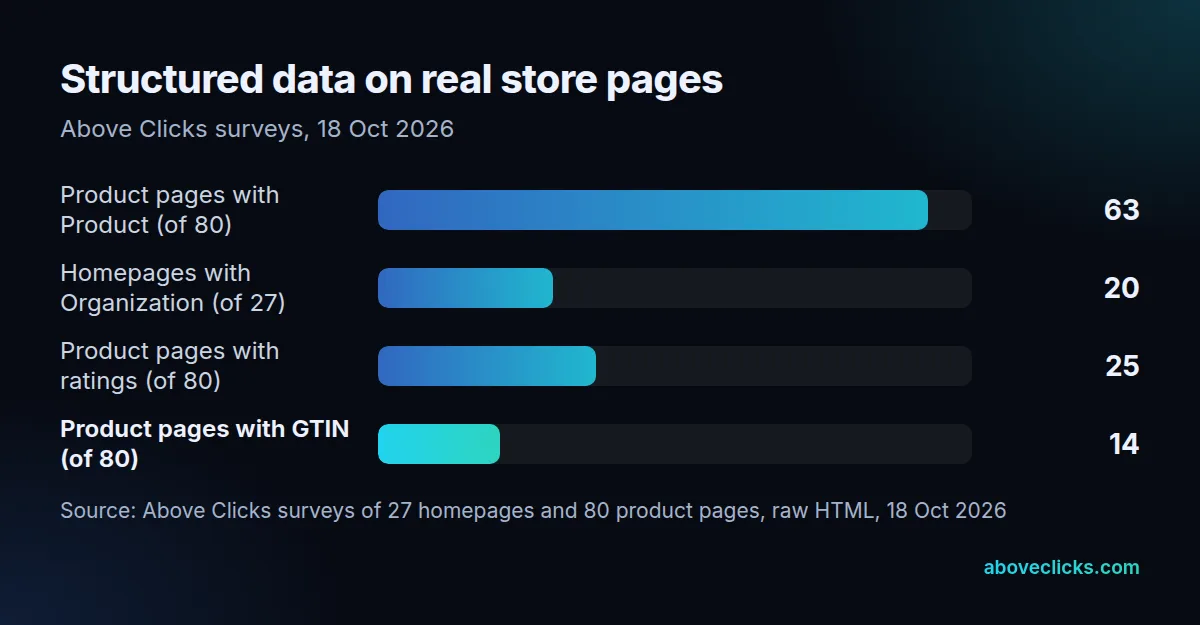
On product pages the picture is similar. Of 80 pages across 16 Shopify stores, 63 had Product markup with an offer, but only 25 included review ratings and just 14, from 3 stores, a GTIN. 3 stores, Brooklinen, Gymshark and Stone and Strand, had no Product markup in the raw HTML; they may add it with JavaScript, which our check can’t see. For most stores the gap isn’t adding schema; it’s filling in the identifiers and ratings it already has a slot for.
Our technical SEO service audits and fills those gaps, and the e-commerce SEO guide shows where markup fits in a full audit.