Industries · Jewelry

Jewelry marketing for stores selling high-value pieces online.

We do jewelry marketing for online stores: Meta, Google and SEO built around a long path to purchase, gifting peaks and the rules on how metals and stones can be described. Every target starts from the margin on each order, not the ROAS a platform reports.

200+ clients served 500+ projects delivered

Free jewelry marketing audit

We’ll check your store, ads and search visibility and send a PDF report within 2 workdays.

Three fields and you’re done. The PDF report shows what we found on your own pages and accounts, and the order we’d fix it in. It covers the problems we see most often:

  • A long path to purchase
  • Gifting peaks
  • Trust at a high price
Chat on WhatsApp Prefer to talk first? Send us your URL on WhatsApp.

Your PDF report comes by email. If you want to discuss going ahead after reading it, we’ll set up a video meeting. We use your details only for this audit.

Results

Above 9x ROAS on Meta and Google, in the ad accounts.

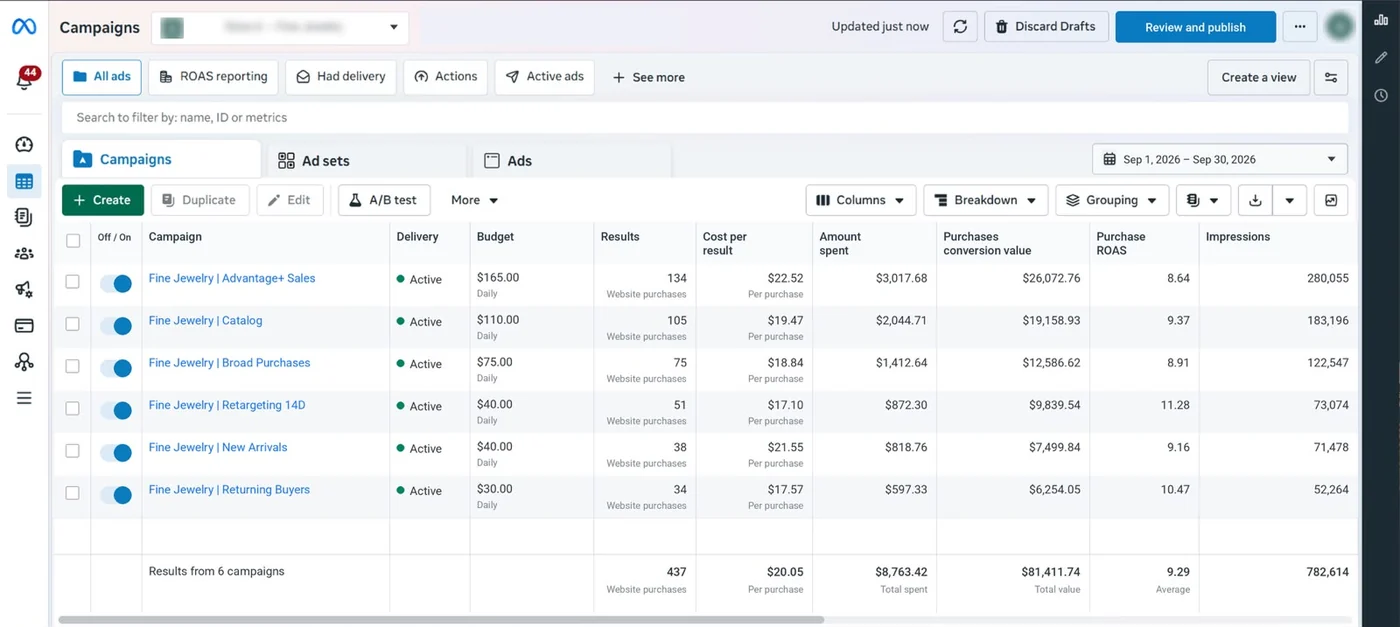
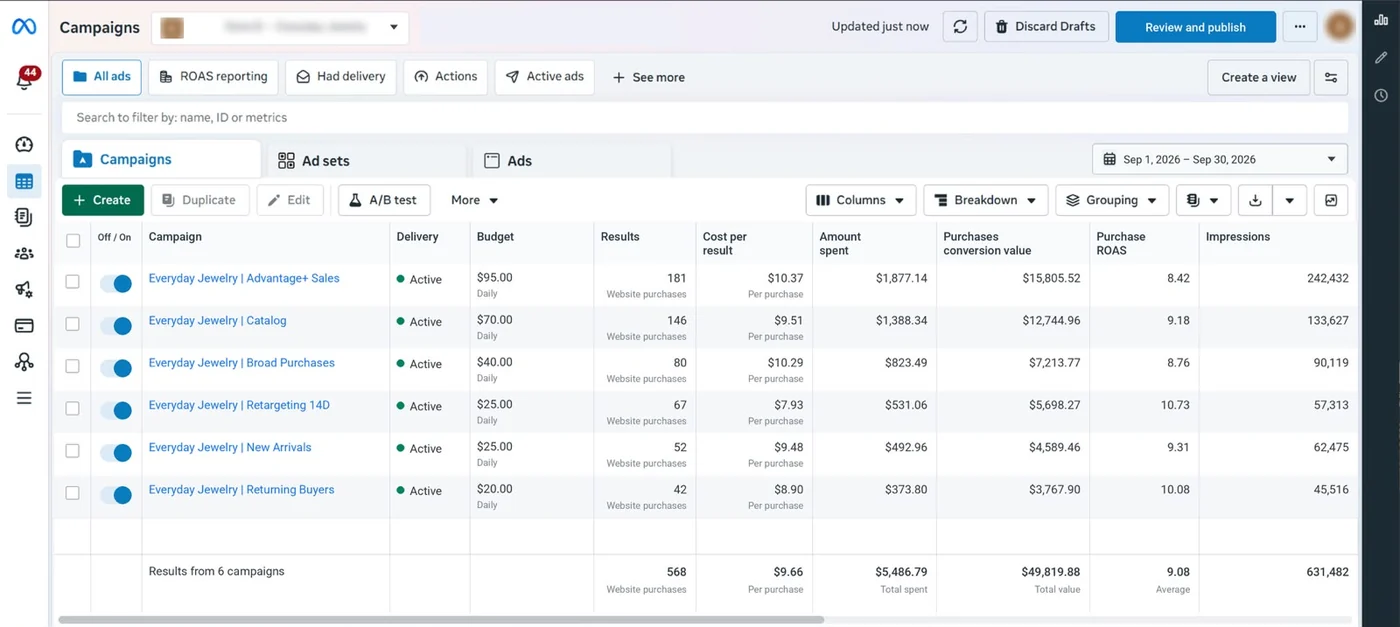
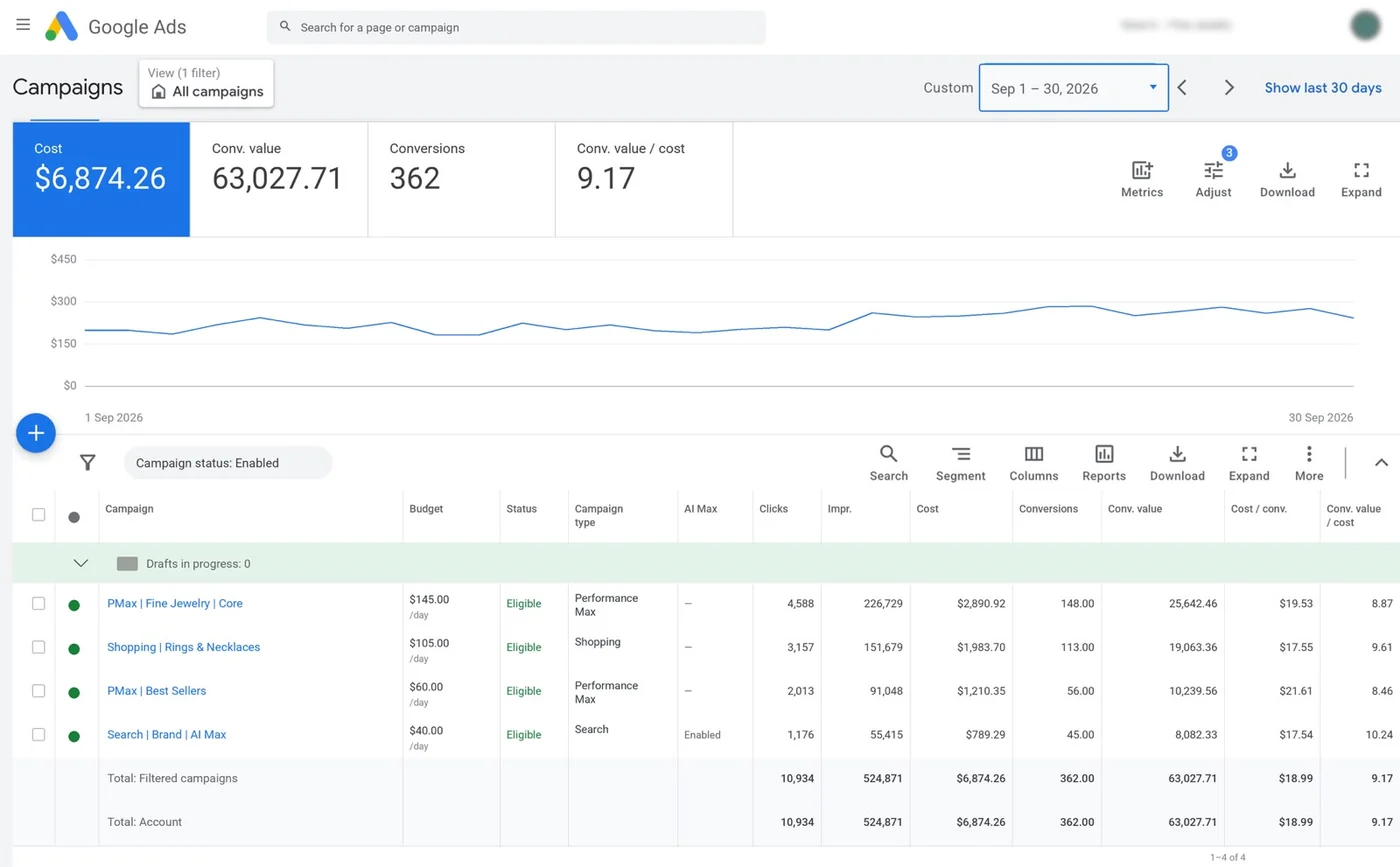
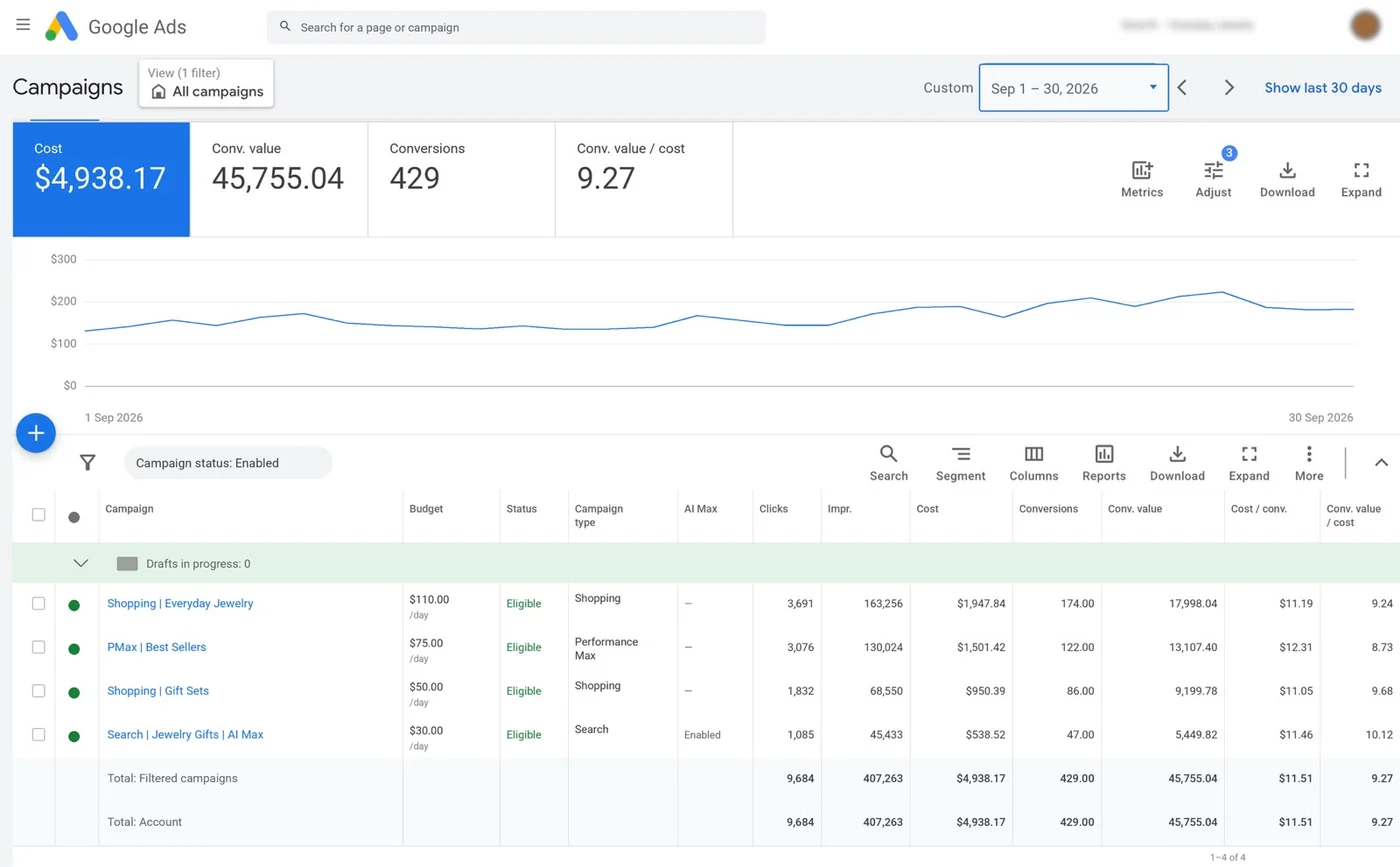
Two jewelry stores, one fine and one everyday, over 1 to 30 September 2026. Across Meta and Google Ads, $26.1K of spend returned $240K in tracked purchase value, a blended ROAS of about 9.2, and every account stayed between 9.08 and 9.29. ROAS here is the platform-reported conversion value divided by spend. The stores are anonymized, the account names are hidden, and the screenshots are shown with their permission.

Meta Ads Manager campaigns report for an anonymized fine jewelry store, 1 to 30 September 2026: 6 campaigns, 437 website purchases at $20.05 each, $8,763.42 spent, $81,411.74 purchase conversion value, 9.29 average purchase ROAS
Meta Ads, fine jewelry: 9.29 ROAS · $81.4K purchase value from $8.8K spend · 437 purchases (Sep 2026)
Meta Ads Manager campaigns report for an anonymized everyday jewelry store, 1 to 30 September 2026: 6 campaigns, 568 website purchases at $9.66 each, $5,486.79 spent, $49,819.88 purchase conversion value, 9.08 average purchase ROAS
Meta Ads, everyday jewelry: 9.08 ROAS · $49.8K purchase value from $5.5K spend · 568 purchases (Sep 2026)
Google Ads campaigns overview for an anonymized fine jewelry store, 1 to 30 September 2026: Performance Max, Shopping and Search campaigns, $6,874.26 cost, 63,027.71 conversion value, 362 conversions, 9.17 conversion value per cost
Google Ads, fine jewelry: 9.17 ROAS · $63.0K conversion value from $6.9K cost · 362 conversions (Sep 2026)
Google Ads campaigns overview for an anonymized everyday jewelry store, 1 to 30 September 2026: Shopping, Performance Max and Search campaigns, $4,938.17 cost, 45,755.04 conversion value, 429 conversions, 9.27 conversion value per cost
Google Ads, everyday jewelry: 9.27 ROAS · $45.8K conversion value from $4.9K cost · 429 conversions (Sep 2026)

Results

From 9.74K to 276K clicks, in Search Console.

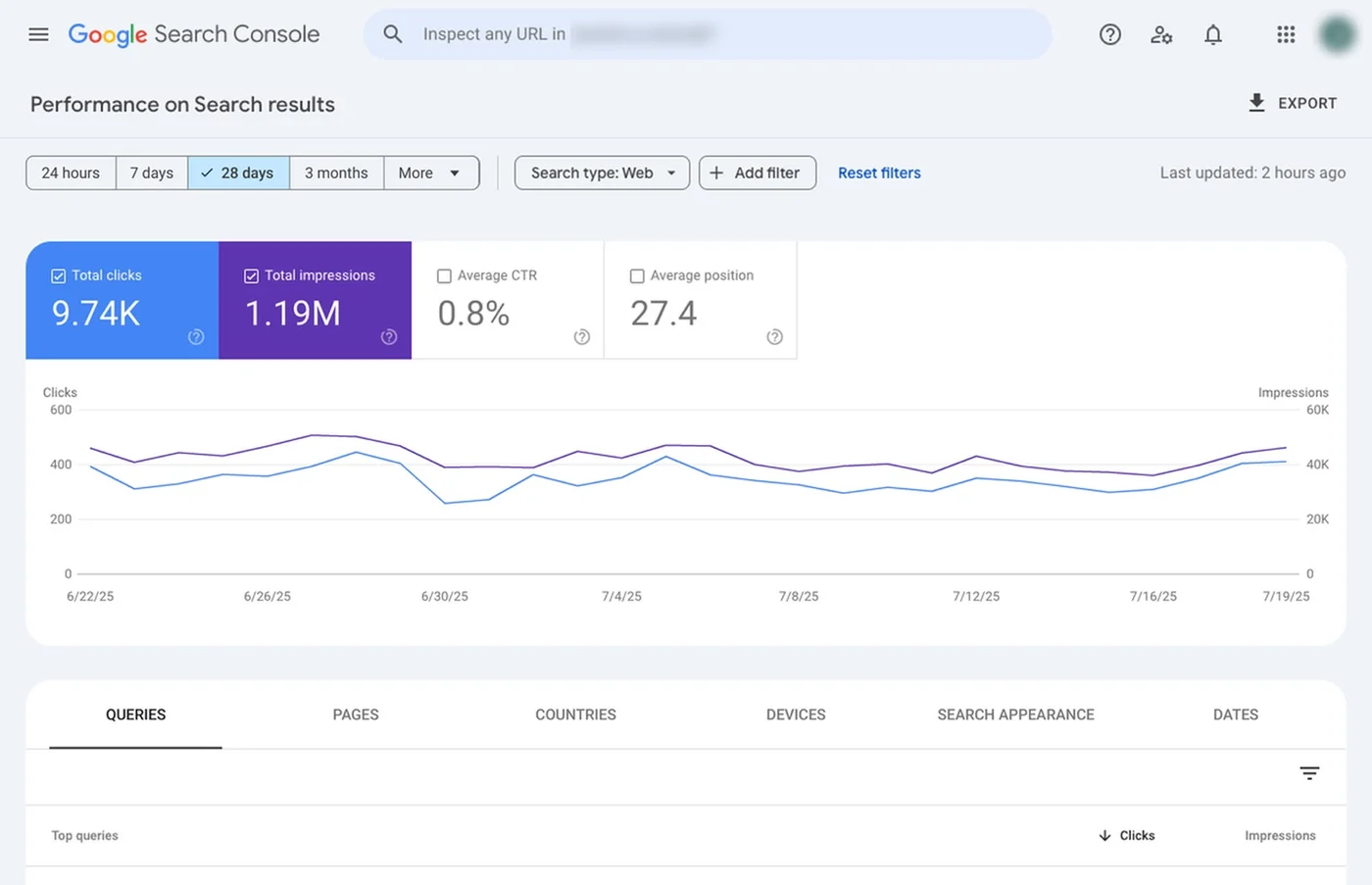
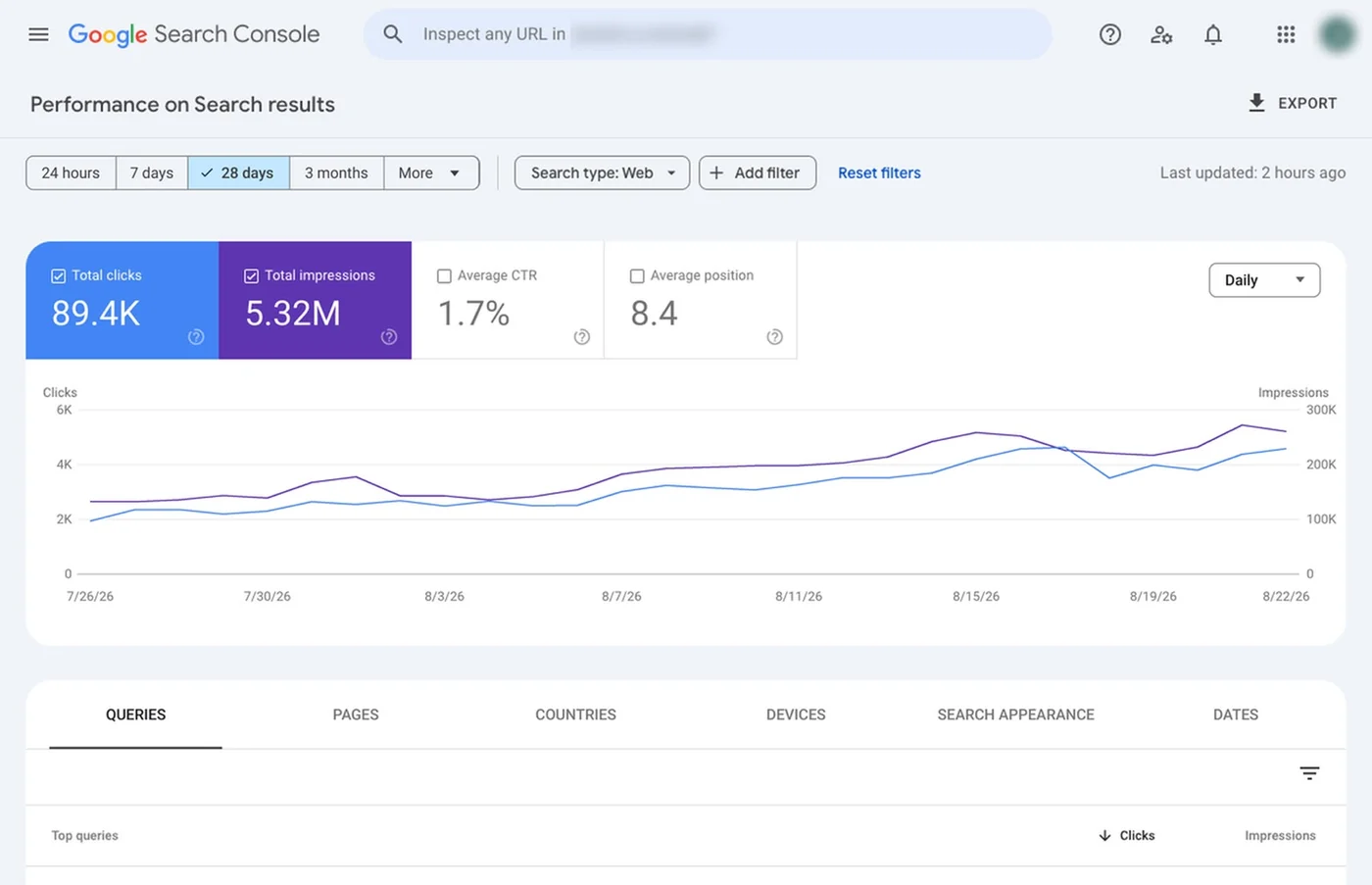
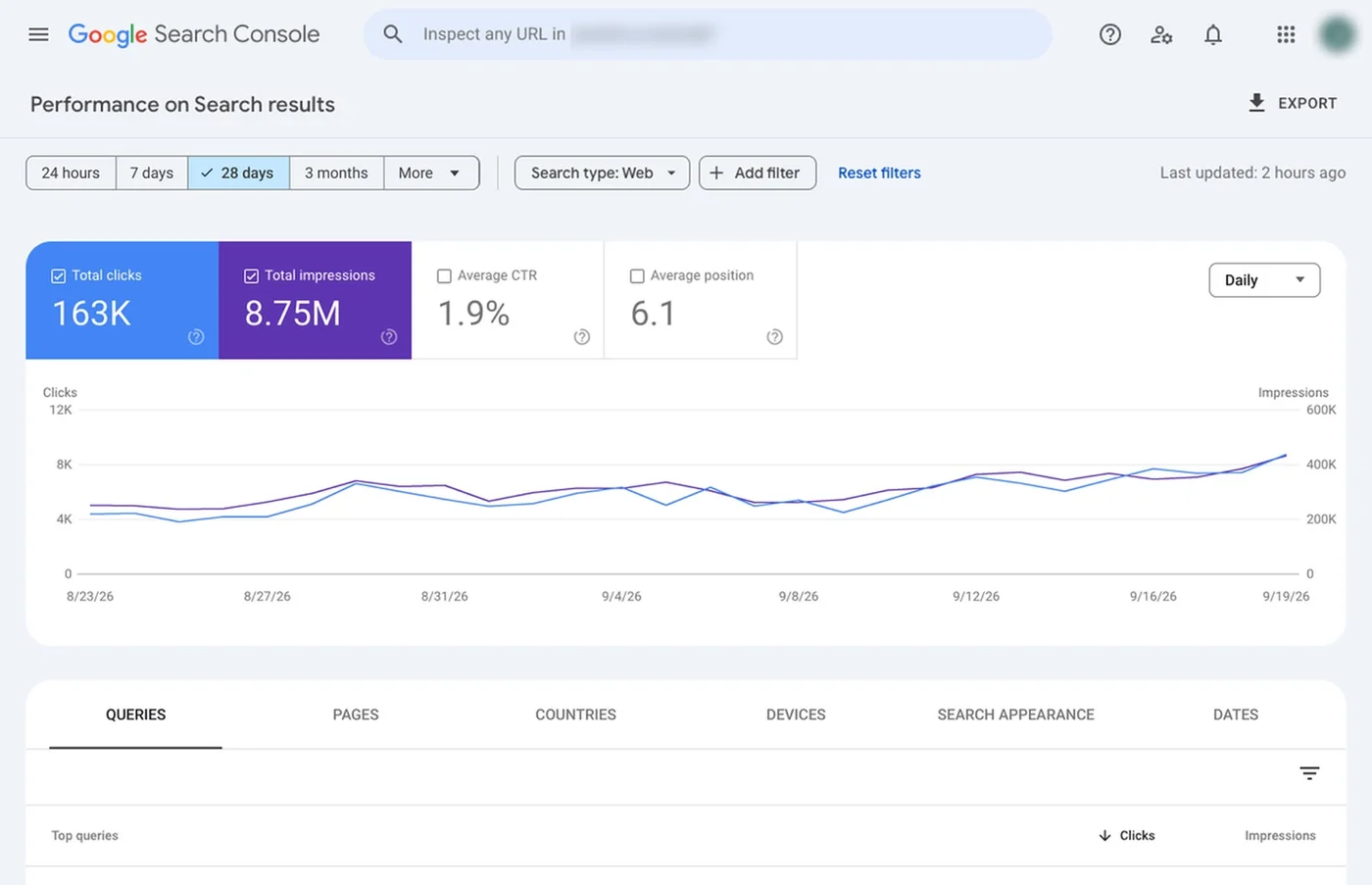
One jewelry client, four 28-day windows from Google Search Console (web search). Clicks per 28 days grew from 9.74K to 276K, about 28 times, impressions from 1.19M to 14M, and average position moved from 27.4 to 4.5. The client is anonymized, the domain is hidden, and the screenshots are shown with their permission.

Google Search Console performance report for an anonymized jewelry e-commerce client, web search, 28 days 22 June to 19 July 2025: 9.74K total clicks, 1.19M impressions, 0.8% average CTR, average position 27.4
Before: 9.74K clicks · 1.19M impressions · average position 27.4 (22 Jun to 19 Jul 2025)
Google Search Console performance report for an anonymized jewelry e-commerce client, web search, 28 days 26 July to 22 August 2026: 89.4K total clicks, 5.32M impressions, 1.7% average CTR, average position 8.4
After: 89.4K clicks · 5.32M impressions · average position 8.4 (26 Jul to 22 Aug 2026)
Google Search Console performance report for an anonymized jewelry e-commerce client, web search, 28 days 23 August to 19 September 2026: 163K total clicks, 8.75M impressions, 1.9% average CTR, average position 6.1
After: 163K clicks · 8.75M impressions · average position 6.1 (23 Aug to 19 Sep 2026)
Google Search Console performance report for an anonymized jewelry e-commerce client, web search, 28 days 20 September to 17 October 2026: 276K total clicks, 14M impressions, 2% average CTR, average position 4.5
After: 276K clicks (28x growth) · 14M impressions · average position 4.5 (20 Sep to 17 Oct 2026)

A relevant result

Real numbers, or none at all.

We only publish results from our own reports and platform exports, with the timeframe and data source.

Case study

From a sprawling custom CMS to a focused Shopify store

  • 3,847 → 206,849Search Console clicks in 28 days
  • 2.41 → 8.76Meta Ads ROAS, Dec 2025 vs Sep 2026
  • 1.21 → 8.33Google Ads ROAS, Dec 2025 vs Sep 2026
  • 240 of 240tracked keywords in Google’s top 10, 86 in positions 1–3
Industry
Jewelry e-commerce: rings, necklaces, earrings and personalized gifts
Market
United States
Channels
SEO, Meta Ads, Google Ads
Platform
Custom CMS → Shopify (launched May 12, 2026, same domain)
Timeframe
January–December 2026 engagement, three quarters complete

The challenge

The store’s custom CMS exposed 52,684 discovered URLs, and 47,948 of them were unwanted variants: faceted URLs, tag indexes and duplicate pagination. Google Ads held 19 legacy campaigns (4 delivering in the baseline month) with incomplete purchase tracking, and Meta’s purchase values were incomplete too.

What we did

  • Repaired purchase measurement first: one USD order-value specification, Meta Pixel and Conversions API deduplicated, and one primary Google Ads purchase action with transaction IDs.
  • Moved the store from the custom CMS to Shopify on May 12, 2026, on the same domain, with 4,736 canonical URLs and permanent redirects for equivalent old pages.
  • Rebuilt Google Ads around two Performance Max campaigns, Shopping and branded Search, reorganized Meta around prospecting, catalogue, new collections and returning shoppers, and grew SEO content against 240 fixed keywords.

Results

  • Search Console clicks 3,847 → 206,849 and impressions 447,913 → 10,247,981 (28 days: Dec 4–31, 2025 vs Sep 20–Oct 17, 2026); CTR 0.9% → 2%, average position 22.8 → 7.9.
  • All 240 tracked keywords in Google’s top 10, 86 in positions 1–3 (Ahrefs Rank Tracker, Google US desktop, October 17, 2026).
  • Meta Ads ROAS 2.41 → 8.76 (spend $9,847.63 → $48,736.29, purchases 102 → 1,897) and Google Ads ROAS 1.21 → 8.33 (spend $11,483.79 → $39,847.63, purchases 62 → 1,473), Dec 2–31, 2025 vs Sep 1–30, 2026.
  • 52,684 discovered URLs → 4,736 canonical Shopify URLs, about 91% smaller.

Data source

Google Search Console (Performance report, web search), Ahrefs Rank Tracker, Google Ads and Meta Ads Manager campaign reports. Money in USD; ROAS is attributed merchandise value divided by ad spend, not profit.

Screenshot (redacted)

Six report screenshots, before and after: Search Console, Google Ads and Meta Ads.

What’s next

The fourth and final quarter of the January–December 2026 engagement.

The December baseline had incomplete purchase reporting, so the ROAS change is reported attributed performance, not a like-for-like profit comparison. Meta and Google can both count the same order, and the two Search Console periods differ in season and catalogue.
See a sample report

The challenges

Why jewelry sells differently.

A jewelry store sells something people look at many times before they buy, often as a gift with a fixed date. These are the six problems we see most often in jewelry brands’ ad accounts and stores.

  • 01

    A long path to purchase

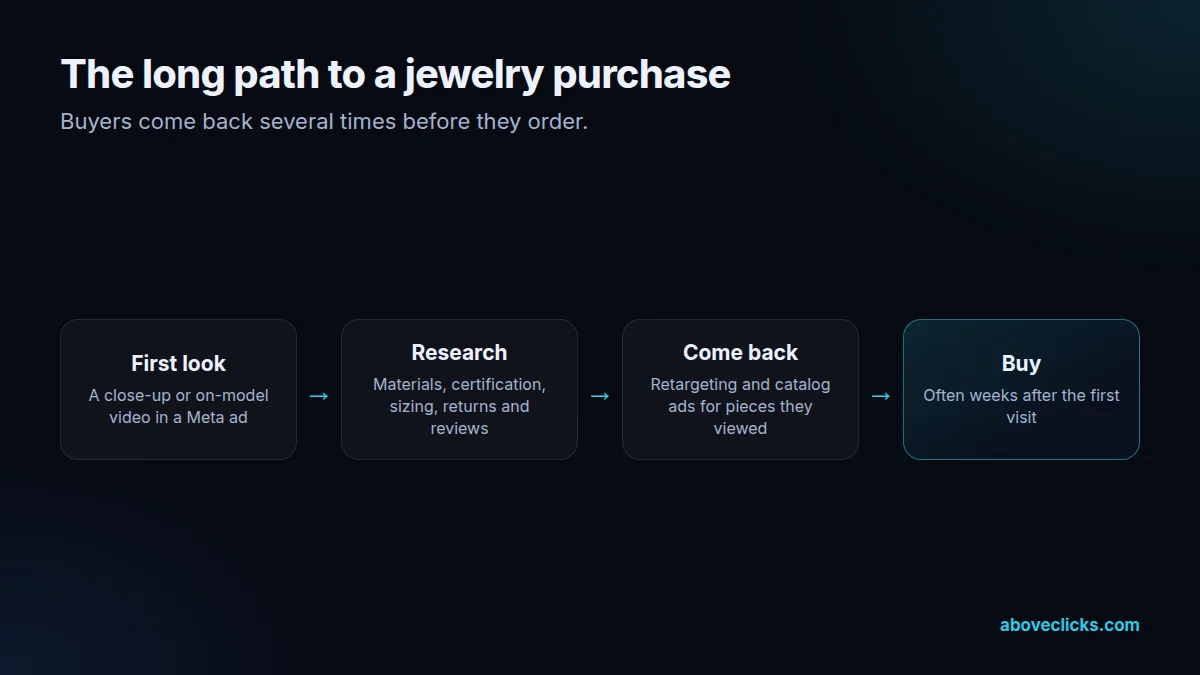
    Buyers see a piece, research materials and reviews, and come back days or weeks later. Short attribution windows give the first ad no credit for the sale it started.

  • 02

    Gifting peaks

    Valentine’s Day, Mother’s Day and the holidays carry a large share of the year. Accounts that start preparing when demand arrives pay more for every sale.

  • 03

    Trust at a high price

    Shoppers want the metal, stone, size and return terms before they pay. Thin product pages lose sales the ad already won.

  • 04

    Variants by metal, stone and size

    One ring in three metals and twelve sizes is 36 items in the feed. Without structure, Shopping treats them as one product and misses specific searches.

  • 05

    Wording the FTC regulates

    Words like gold plated, vermeil, diamond and sapphire have legal meanings in the US. A feed title or ad that gets them wrong is a real risk, not a style issue.

  • 06

    Photos that sell

    Jewelry is small, shiny and hard to photograph. Weak creative makes good pieces look cheap, and ads fatigue quickly when only a few shots exist.

Jewelry customer journey: first seeing a piece in an ad, researching materials and reviews, coming back through retargeting, then buying
Short attribution windows undercount the early steps, so we judge campaigns on store data and MER.

In 1:10 · animated

Before we change anything, we check five things.

A short animated walk-through of the first checks in our audit. No sound needed: everything is on screen, and the transcript is below.

What we check first for a jewelry brand, an animated explainer of 1:10 with on-screen captions and controls to pause.

Read the transcript
  1. What we check first for a jewelry brand Five checks, from the gifting calendar to FTC wording.
  2. 1. Does the first ad get credit? Buyers see a piece and come back days or weeks later. We compare platform-reported sales with store data and MER. (Example store: short attribution windows undercount the start of the journey.)
  3. 2. Is the gifting calendar planned? Valentine’s Day, Mother’s Day and the holidays carry a large share of the year. Preparing when demand arrives costs more per sale. (Example store.)
  4. 3. Does the product page answer it all? Shoppers want the metal, stone, size and return terms before they pay at this price. (Example product page.)
  5. 4. Are the variants in the feed? One ring in three metals and twelve sizes is 36 items. Sent as one product, Shopping misses specific searches. (Example ring.)
  6. 5. Is the wording FTC-safe? The FTC Jewelry Guides give words like gold plated, vermeil, diamond and sapphire specific meanings in the US. We check titles, ads and feeds. (Example feed. Source: FTC Guides for the Jewelry, Precious Metals, and Pewter Industries.)
  7. Then we fix them, in that order. Want this checked on your jewelry store? The free growth audit covers all five, in writing.

Our approach

Jewelry marketing judged on margin and store data.

Platform ROAS isn’t the number we steer by. Meta and Google each claim the sales they touched, and on a long path to purchase both often claim the same order. So we judge campaigns on store revenue against total ad spend (MER), set next to each platform’s own report. A jewelry store with $60,000 in monthly revenue and $12,000 in ad spend has an MER of 5, whatever the two dashboards add up to.

Targets start from margin. At a 55% contribution margin, break-even ROAS is 1 ÷ 0.55 = 1.8. Gold and lab-grown pieces often carry different margins, so we set the target by category: fine gold at a 40% margin needs 1 ÷ 0.4 = 2.5, while lab-grown pieces at 65% break even at 1 ÷ 0.65 = 1.5. One account-wide target would overspend on gold jewelry.

Jewelry gifting peaks are planned backwards from the delivery date. Valentine’s Day 2027 falls on a Sunday. If engraving takes 2 business days and shipping takes 3, the last safe order day is Friday, February 5, for delivery on Friday, February 12. That date goes into ads, banners and emails, and budget moves to gift cards and in-stock pieces once it passes.

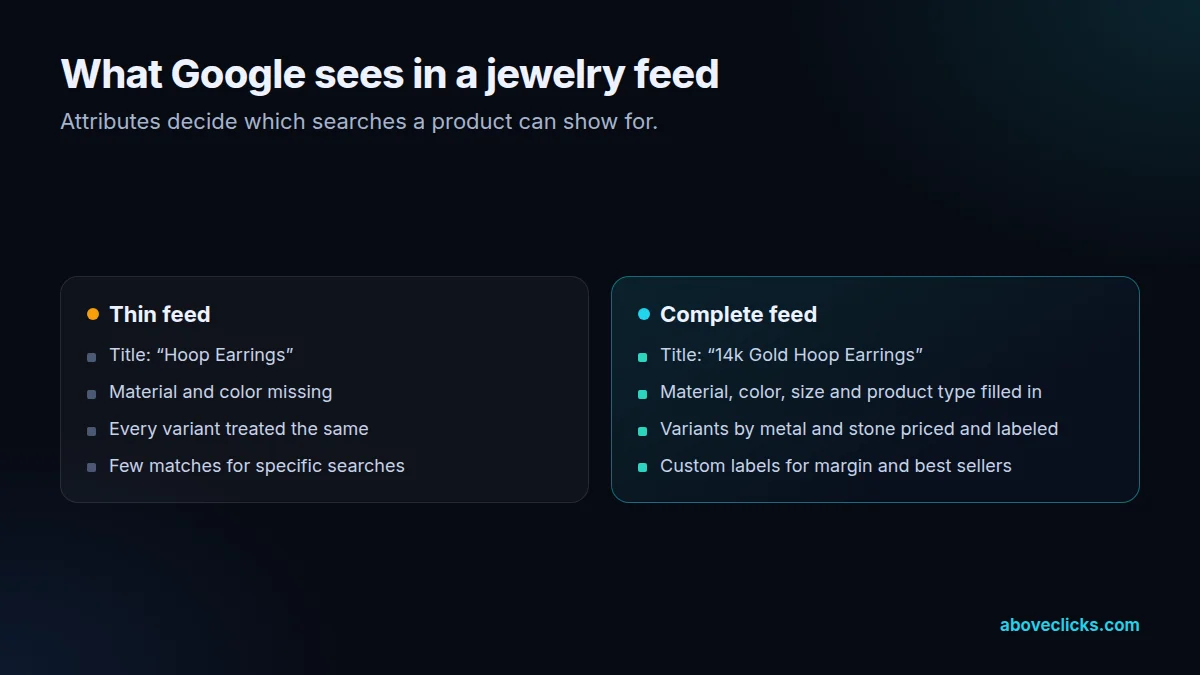
A jewelry feed decides which searches a piece can show for. Each metal, stone and size is its own item, linked to its siblings with an item group ID. Titles follow the order shoppers search in (metal, stone, product type, style), and the material and color attributes are filled from your store data. Custom labels group pieces by margin, category and best sellers, so budget goes to what sells.

Every title, ad and product page is checked against the FTC’s Jewelry Guides (16 CFR Part 23) before it runs. A lab-grown stone is named as lab-grown in the same size as the stone name, plated pieces say plated, and diamond weights shown in points also show the carat figure. That protects the brand and the jewelry buyer.

Product pages carry the trust. Each page answers what a buyer needs before paying: metal and karat, stone and its treatment, exact size and weight, care, certificates where they exist, and return and resizing terms. Detailed, original descriptions also give search engines something unique to rank, which matters when most online jewelry stores copy the supplier’s text.

Jewelry creative is planned in concepts, not single ads: one idea, such as a piece on the hand or a gift being opened, made in a few formats. New shots are planned before frequency climbs, so the account always has something fresh to test.

Our playbook

How each channel does its job.

The same four channels every store uses, set up for variants, gifting peaks and trust, with email and creative supporting them.

  • Meta Ads

    Catalog ads from a clean feed grouped by category and margin, on-hand and gifting creative, retargeting that covers the whole research period, and launch plans for each gifting peak.

  • Google Ads

    Shopping and Performance Max with material, color and variants complete, custom labels for margin and best sellers, and search campaigns for specific terms like “14k gold hoop earrings”.

  • SEO

    Jewelry collection pages by metal, stone, style and occasion, original product descriptions, and a clear rule for sold-out and discontinued pieces so their search value isn’t lost.

  • Tracking and profit

    Conversion tracking that works across Meta and Google, store revenue against total ad spend, and break-even ROAS by category, so targets reflect the money you keep.

  • Email and retention

    Welcome, browse abandonment and post-purchase flows, plus reminders before anniversaries and gifting dates. Past buyers of jewelry brands come back for gifts, which makes them the cheapest next sale.

  • UGC and on-hand creative

    Creator briefs for on-hand, unboxing and styling videos, written from what the tests show. Disclosure is built into every brief, and claims about metals and stones follow the FTC wording.

Comparison of a thin jewelry product feed with missing attributes and a complete feed with material, color, product type and variants by metal and stone
Complete attributes let Shopping match searches like “14k gold hoop earrings”.
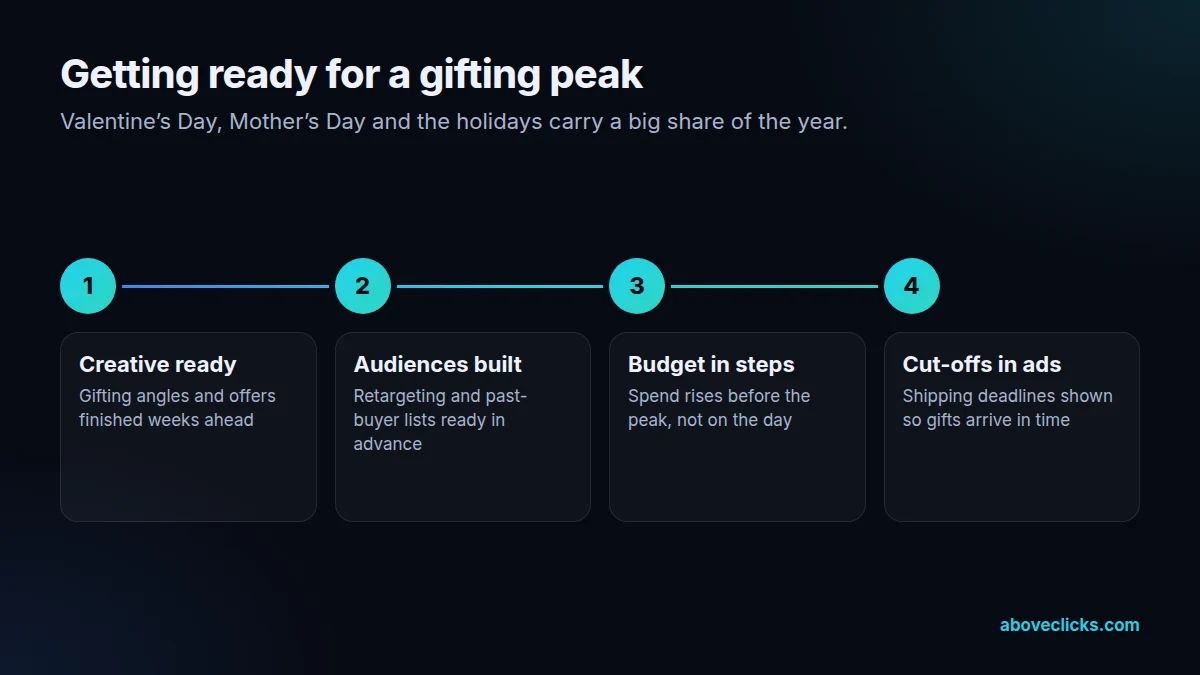
Four steps to prepare jewelry campaigns for a gifting peak: creative and offers ready early, retargeting audiences built, budgets raised in steps and shipping cut-offs in ads
Preparation starts weeks before demand arrives, not when it does.

Rules that apply

FTC and platform rules a jewelry store has to follow.

Most misleading jewelry titles, rejected ads and risky product claims trace back to one of these.

  • Lab-grown diamonds

    Under § 23.12, a laboratory-created diamond needs a clear qualifier such as “laboratory-grown” or “laboratory-created”, so buyers know it isn’t a mined stone.

  • Lab-grown gemstones

    Under § 23.25, words like ruby, sapphire or emerald for a lab-grown stone must be immediately preceded, with equal conspicuousness, by “laboratory-grown” or similar. That applies to feed titles too.

  • Gold plated and vermeil

    Under § 23.3, gold plated means an alloy of at least 10 karat, and electroplate needs at least 0.175 microns. § 23.4 limits vermeil to gold-coated sterling silver.

  • Diamond weight

    Under § 23.18, a weight given in points must also be stated as decimal parts of a carat, for example 25 points or .25 carat.

  • Treatments

    Under § 23.24, a gemstone treatment has to be disclosed when it isn’t permanent, creates special care needs or significantly affects the value.

  • Creators and ad standards

    Paid creators must disclose the deal under the FTC’s endorsement guides, and Meta’s Advertising Standards apply to every ad.

How we use AI here

How we use AI in jewelry marketing.

AI helps with the volume work a jewelry catalog of metals, stones and sizes creates. People check everything a shopper will read.

  • Feed titles at scale

    AI drafts titles in the order shoppers search (metal, stone, product type, style), and every title is checked against the FTC wording before it goes live.

  • Creative variations

    New hooks and copy for each jewelry concept, so tests keep running.

  • Review and question themes

    AI groups reviews and customer questions, such as sizing, tarnish or clasp strength, so product pages answer them before the next buyer asks.

  • Alt text and descriptions

    First drafts of alt text and product descriptions from your product data. A person checks metal, karat, stone and treatment details before publishing.

Where it doesn’t help: claims about metals, stones and treatments. Those come from your product team and suppliers, because the FTC Guides set the wording and a wrong claim costs trust.

Where this comes from

Where this comes from.

This page comes from real work for a US jewelry e-commerce brand, shown in the case study on this page. The old site had more than 50,000 pages, mostly tag and pagination duplicates, and conversion tracking was broken across 19 fragmented Google Ads campaigns. We moved the store to a new platform with SEO built into the migration, cut it to 4–5k pages that match the catalog, repaired tracking and rebuilt the Google Ads account.

Shopping and Performance Max were launched on the repaired feed, and Meta Ads ran next to SEO through the move. The feed routine, margin targets and gifting-peak calendar on this page are the process from that engagement. The case study lists the results and their data sources, also shown on our results page.

Pricing

Starting prices, in US dollars.

The audit is free. Paid work starts at these prices, and your exact cost is fixed in writing before any work begins.

  • Free jewelry marketing audit

    Free no obligation

    We’ll check your store, ads and search visibility and send a PDF report within 2 workdays.

    Get my free audit
  • After the audit

    Store marketing setup

    From $400 one-off

    Tracking, feed and campaigns rebuilt by category and margin before spend goes up.

    • Conversion tracking across Meta and Google
    • Catalog grouped by category and margin
    • Break-even ROAS set by category
    • A launch plan for the next gifting peak
    Start with the free audit
  • Monthly jewelry marketing

    From $600 monthly, plus ad spend

    Meta, Google and SEO run as one plan and judged on store revenue.

    • Catalog, Shopping and Performance Max managed
    • Collection pages by metal, stone, style and occasion
    • Store revenue against total ad spend in every report
    Ask about this option

All prices are starting prices in US dollars. Custom work beyond these options is quoted after the audit.

Sources

The documentation we work from.

Platform rules change. These are the official pages we check the work against, so you can check it too.

FAQ

Straight answers.

Can’t find yours? Ask on WhatsApp or by email and we’ll answer it.

How do you measure results when buyers take weeks to decide?

We judge campaigns on store revenue against total ad spend (MER) and on break-even ROAS by category, next to each platform’s own report. Platform numbers alone count the same sale twice.

When should we start preparing for Valentine’s Day or the holidays?

Weeks before the peak. Creative, offers and audiences are ready early, budget rises in steps, and the last safe order date is worked out from your engraving and shipping times.

Can we call lab-grown stones diamonds or sapphires?

Yes, with a qualifier. The FTC Guides require a clear word such as laboratory-grown or laboratory-created, and for gemstone names it must come immediately before the name, just as large.

What can we call gold plated or vermeil?

Gold plated means a plating of at least 10 karat gold alloy, and vermeil means sterling silver coated with gold. We check feed titles and ads against these terms before they run.

How do you handle rings in many sizes and metals?

Each metal, stone and size is its own feed item, linked by an item group ID, and sold-out sizes are kept out of ads.

Which channels work best for jewelry brands?

Meta for discovery and gifting, Google Shopping for specific pieces and SEO for jewelry collection searches. The split depends on your price point.

Do you work with fine jewelry and fashion jewelry stores?

Yes. The channels are the same, but margins, return rates and FTC wording differ, so targets and copy are set per category.

Do you create product photos or videos?

We write the shot lists and creator briefs from what the tests show. Your photographer, studio or creators shoot the jewelry.

Is the case study on this page a real client?

Yes. It is a US jewelry e-commerce brand, shown anonymized, with the data sources for each number listed under it.

Latest guides

Read before you decide.

All guides

Free growth audit

Find out what’s holding your store back.

Tell us about your store. We’ll review your tracking, campaigns and SEO and send you a written audit with the top fixes, ranked by impact.

  • Written audit as a PDF, delivered within 2 workdays (see a sample)
  • A video meeting to go through it, if you want to discuss next steps
  • Free and no obligation
  • Read-only access or screenshots are enough

Free audit
Chat on WhatsApp