EEAT is short for experience, expertise, authoritativeness and trustworthiness, written E-E-A-T by Google. It's the yardstick Google's search quality raters use to judge whether a page is reliable, and Google says trust matters most, while EEAT itself isn't a ranking factor.
EEAT is short for experience, expertise, authoritativeness and trustworthiness, written E-E-A-T by Google. It’s the yardstick Google’s search quality raters use to judge whether a page is reliable, and Google says trust matters most, while EEAT itself isn’t a ranking factor.
What does EEAT stand for?
Experience, expertise, authoritativeness and trustworthiness. The first E, experience, was added on 15 December 2022, so the older E-A-T became the four-part version used in Google’s quality rater guidelines today.
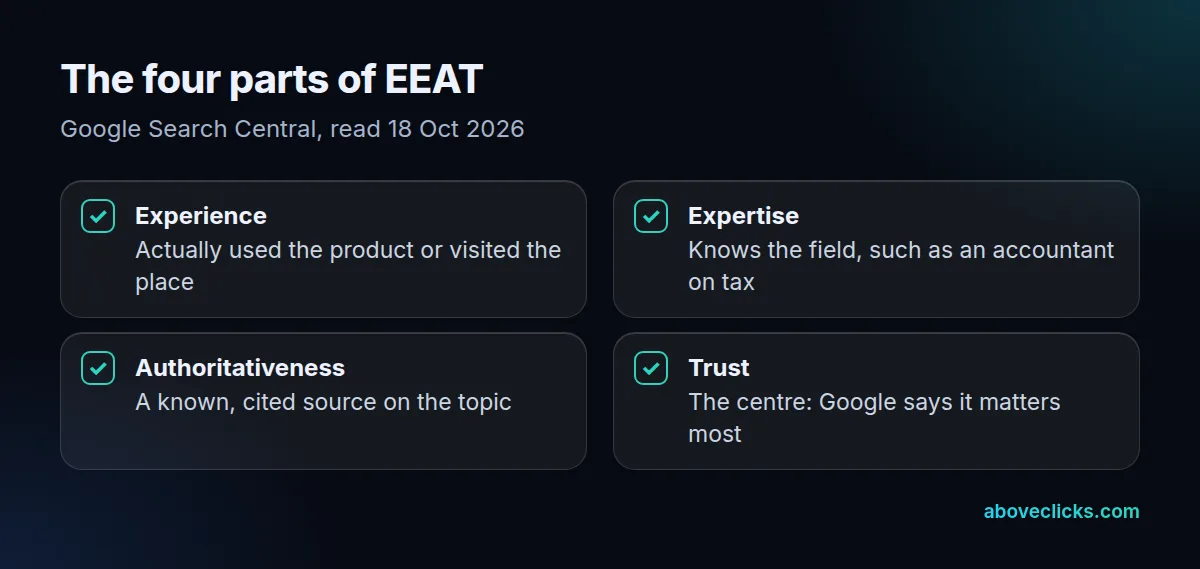
Google’s December 2022 post explains the new E as content made with some degree of experience, such as actually using a product or visiting a place. Its helpful content guidance ranks the four: “Of these aspects, trust is most important.” The other three feed trust, and a page doesn’t need all of them. A review of a tent can earn trust through experience; a page on tax rules needs expertise.
Is E-E-A-T a ranking factor?
Not as a single factor. Google says its systems use a mix of signals that tend to line up with good EEAT, and give even more weight to it on topics that affect health, money or safety.
The raters who use the guidelines don’t move rankings either. Google says so directly: “Search raters have no control over how pages rank.” Their scores tell Google whether its systems work, the way feedback cards help a restaurant. So EEAT is best read as a checklist of what a careful reader looks for, not a switch inside the algorithm. Google’s ranking systems guide shows where the weight sits now: since March 2024 the old helpful content system has been part of the core ranking systems, which judge the content itself page by page. Google’s guidance lists 11 warning signs for content made mainly for search, such as writing to a word count or changing dates to look fresh.
What trust signals do real store sites show?
On 18 October 2026 we read 18 Shopify store homepages and 10 of their blog articles. 15 linked an about page, but only 1 showed a phone number, and only 3 of 10 articles showed who wrote them.
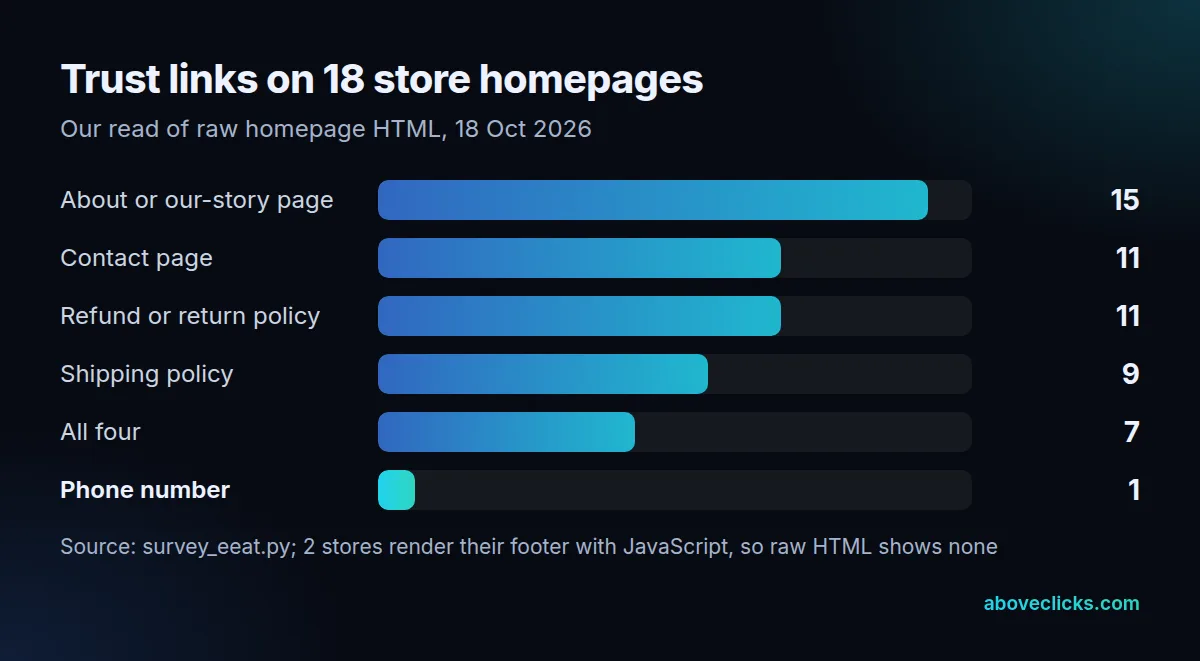
The policy pages were patchier than the about links: 11 of 18 homepages linked a contact page, 11 a refund or return policy and 9 a shipping policy, and only 7 linked all four. Shopify’s built-in refund policy address answered on 14 of 18 stores, so the page often exists even when the homepage doesn’t link it.
7 of the 10 articles did name a Person author in their structured data, but one of those was the brand itself, and none linked to an author page. Shopify’s article template writes the staff account that posted the article into that markup, so a store can “have” authorship in code while a reader sees no byline. Google’s own self-check asks whether content shows background about the author or site, such as links to an author page or an About page.

Example (a hypothetical tea store): it adds a byline linking to a short bio of its buyer, who has visited the estates; a dated “last checked” line on brewing guides; a phone number and returns terms in the footer; and its own photos instead of stock images. None of that is a ranking trick. Each change answers a question a cautious shopper, or a rater, would ask. Trust also covers the page itself loading and behaving well, which is where Core Web Vitals come in. Our ecommerce SEO guide puts these pieces in order, and our technical SEO team audits trust signals alongside the code.