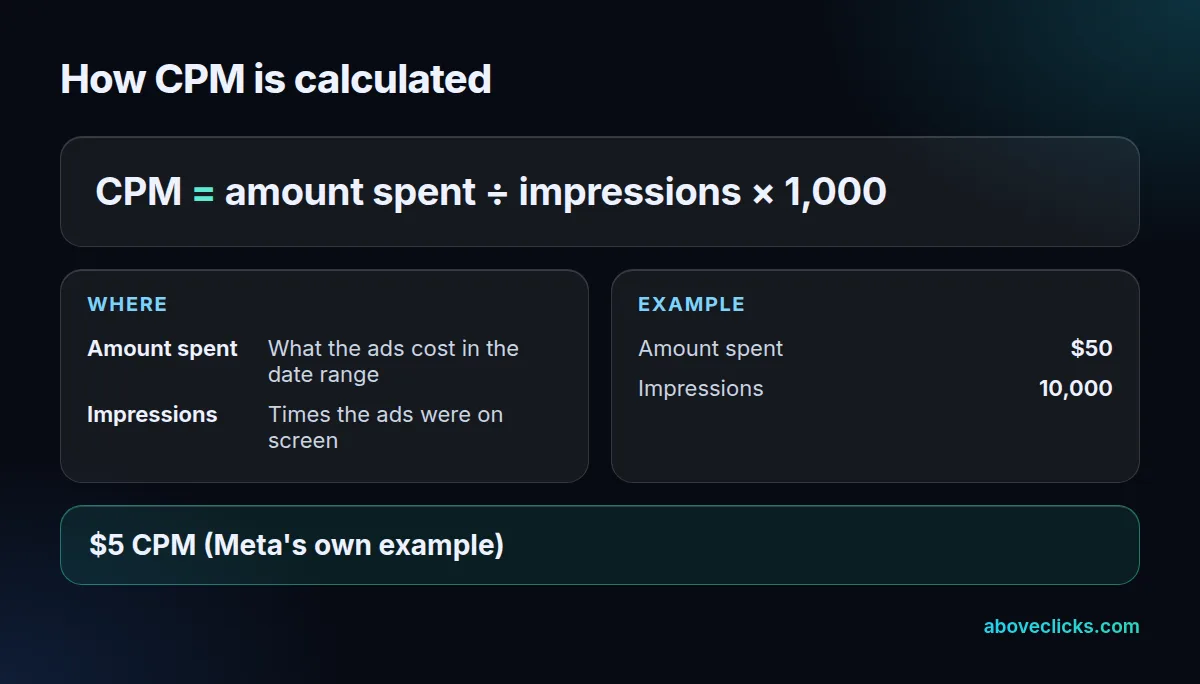
CPM (cost per mille) is the average cost of 1,000 ad impressions: amount spent divided by impressions, multiplied by 1,000. Meta's own example: $50 spent for 10,000 impressions is a $5 CPM. It prices attention, not clicks or sales, so read it next to what those impressions produce.
FormulaCPM = amount spent ÷ impressions × 1,000
CPM (cost per mille) is the average cost of 1,000 ad impressions: amount spent divided by impressions, multiplied by 1,000. Meta’s own example: $50 spent for 10,000 impressions is a $5 CPM. It prices attention, not clicks or sales, so read it next to what those impressions produce.
How do you calculate CPM?
Divide what you spent by the impressions you got, then multiply by 1,000. Meta’s reservation glossary gives the formula and calls it a common way to compare publishers and campaigns.
A hypothetical jewellery store that spent $900 for 75,000 impressions in a week paid a $12 CPM. An impression counts each time an ad is on screen, so one person scrolling past it twice adds 2. That’s why Meta also reports CPP, which its API reference defines as “The average cost to reach 1,000 Accounts Center accounts”. With an ad frequency of 2, CPP is about twice the CPM. Meta’s API reference flags CPP as estimated, like reach itself; the impression-based figure carries no such note.
Is that what you pay on Meta?
Usually, yes: Meta’s billing page says you’re charged based on impressions unless you chose otherwise at ad creation. The column is still an average of many auctions, not a price you set.
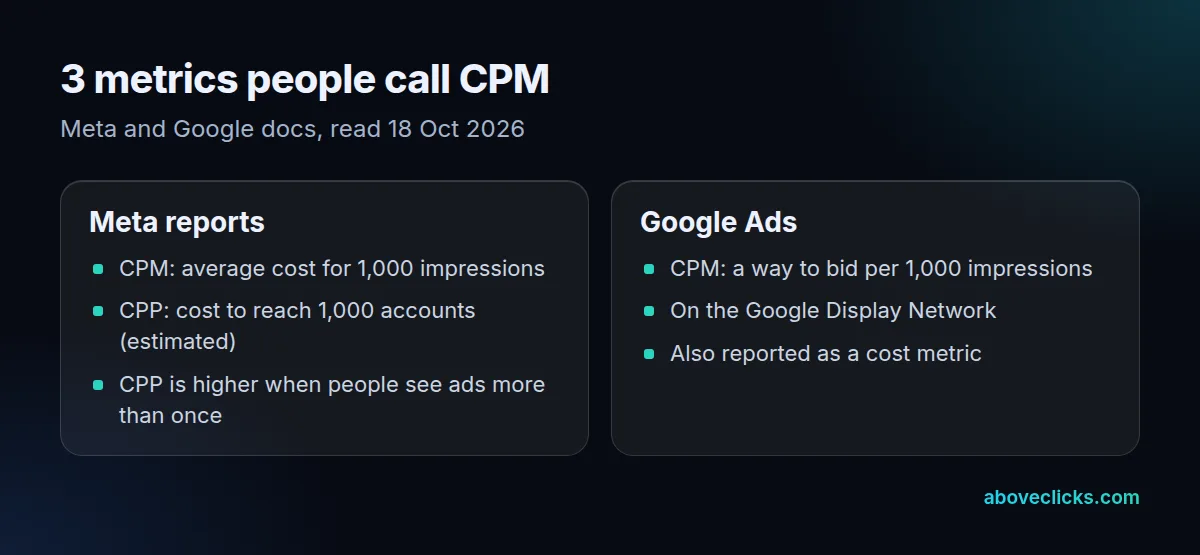
The same page warns that Ads Manager and your receipt can show different impression counts, and that location fees can be added in some regions. Meta’s video metrics page adds that amount spent can take up to 48 hours to process for running ads, so yesterday’s figure may still move. On Google Ads the word means something else too: Google’s definition describes a way to bid per one thousand impressions on the Display Network.
Why do impression costs rise on Meta?
Because more advertisers are bidding for the same people, or your ad set is aimed at a small slice of them. Meta runs an auction where ads compete for impressions on bids and performance, so CPM moves with demand.
Two causes are in your hands. A narrow audience leaves the auction fewer people to choose from; Meta’s guidance on combining ad sets, using its example of 3 ad sets split by dog-related interests, says splitting audiences that way can hurt performance. A weak ad also tends to cost more, since performance is part of what wins the auction. Compare the same ad set week on week before blaming the market: a jump from $11 to $16 in one week after you narrowed the audience points at the targeting, not at competitors.
What is a good cost per thousand impressions on Meta?
The one that produces the cheapest purchase, not the lowest number. Cost per purchase = CPM ÷ (1,000 × click-through rate × conversion rate), so a higher price per thousand can win.
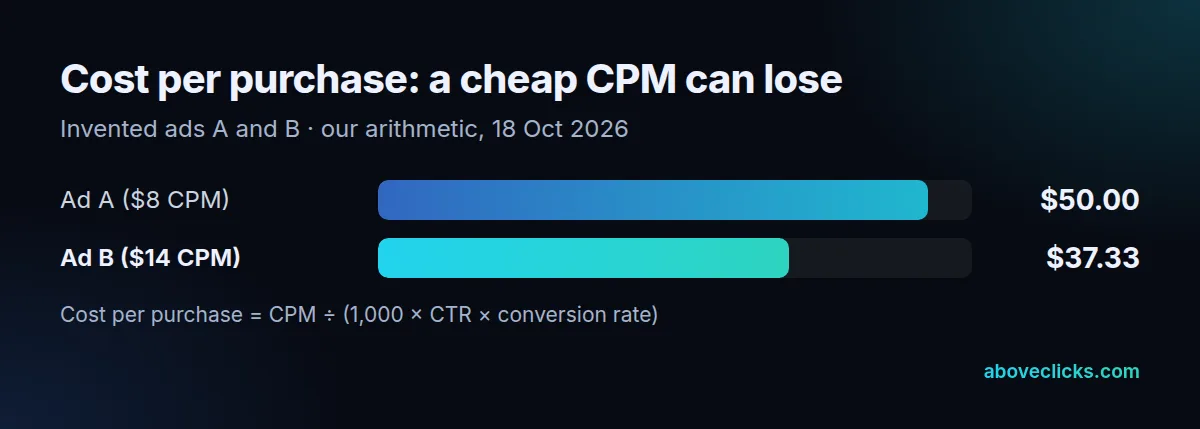
In our illustrative example, ad A buys impressions at an $8 CPM but gets a 0.8% click-through rate and 2% conversion: $50 a purchase. Ad B pays $14, gets 1.5% and 2.5%, and costs $37.33. Run the same sum before you pause an ad for looking expensive: at a $20 CPM with a 2% link CTR and 3% conversion, a purchase still costs only $33.33. Compare each result with your break-even cost per acquisition. Our Meta ads management team reads these together, and the Meta ads for e-commerce guide covers the funnel.