Ad frequency is the average number of times each person saw your ad over a period, calculated as impressions divided by reach. A frequency of 3 means 3 views on average, some people once and some far more, so treat it as a warning light.
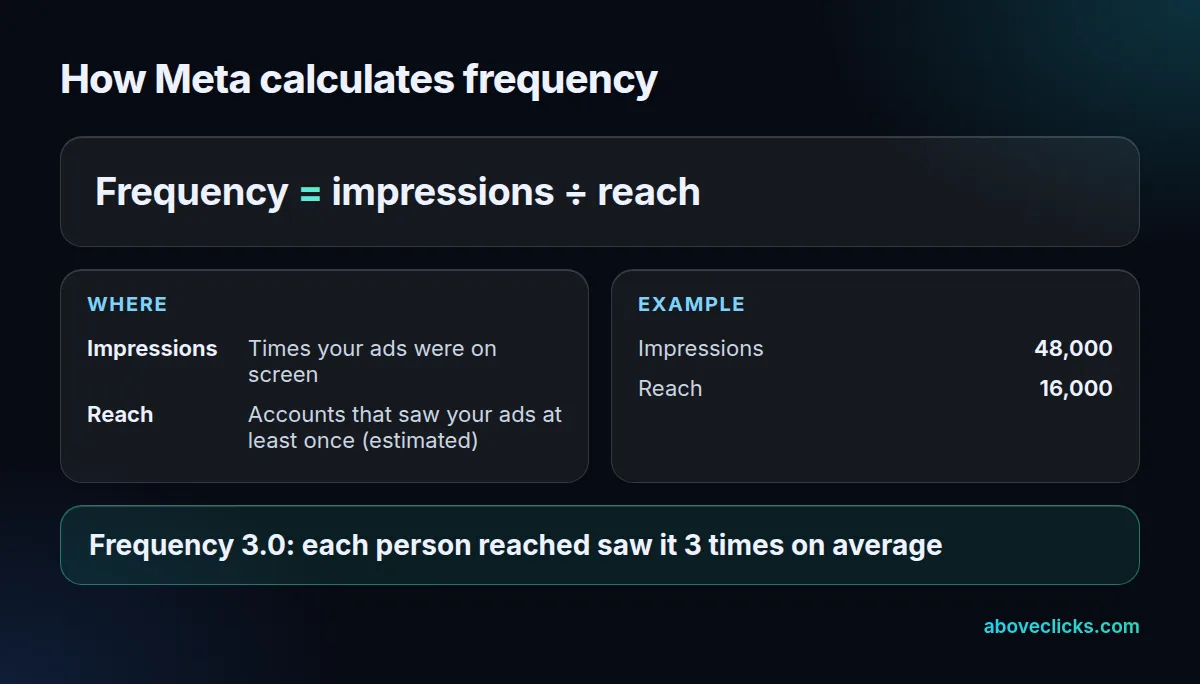
FormulaFrequency = impressions ÷ reach
Ad frequency is the average number of times each person saw your ad over a period, calculated as impressions divided by reach. A frequency of 3 means 3 views on average, some people once and some far more, so treat it as a warning light.
How is ad frequency calculated?
Ad frequency is impressions divided by reach, for whatever date range you pick: 48,000 impressions to 16,000 people is a frequency of 3.0. Meta’s reservation glossary defines it as “The average number of times each person saw your ad”, and its API reference marks the figure as estimated.
The estimate comes from how reach counts people. Meta’s Meta Accounts page gives the example of one person with 1 Facebook profile and 2 Instagram profiles: counted as 1 if the profiles sit in the same Meta Account, as 3 if not. Change the date range and the number changes too, so compare frequencies over the same window, such as 7 days against 7 days.
What is a good ad frequency?
There’s no single right number; Meta says frequency “may average 1 to 2 per ad set or may be much higher”, depending on budget, audience size and schedule. Judge it by what happens to results as it rises.
Some repetition is the point. Meta’s glossary says frequency helps build awareness and recall by showing your message to the people in your target audience multiple times, and asks you to read it alongside your results and ad relevance diagnostics.
The same Meta page gives the rule to use: if performance drops as frequency climbs, the audience may be tiring of the ad, so change the creative or the targeting. For a hypothetical candle store, a frequency of 4 with a steady $22 cost per purchase is fine; a frequency of 4 where cost per purchase rose from $22 to $35 over 2 weeks is the signal. Our creative fatigue checker takes a daily ad report and flags which ads are wearing out.
Can you cap frequency on Meta?
Yes, in specific setups: reservation buying sets a frequency cap of 2 impressions every 7 days by default, and you can change it. Reservation buys reach at a fixed cost, rather than through the auction most stores use.
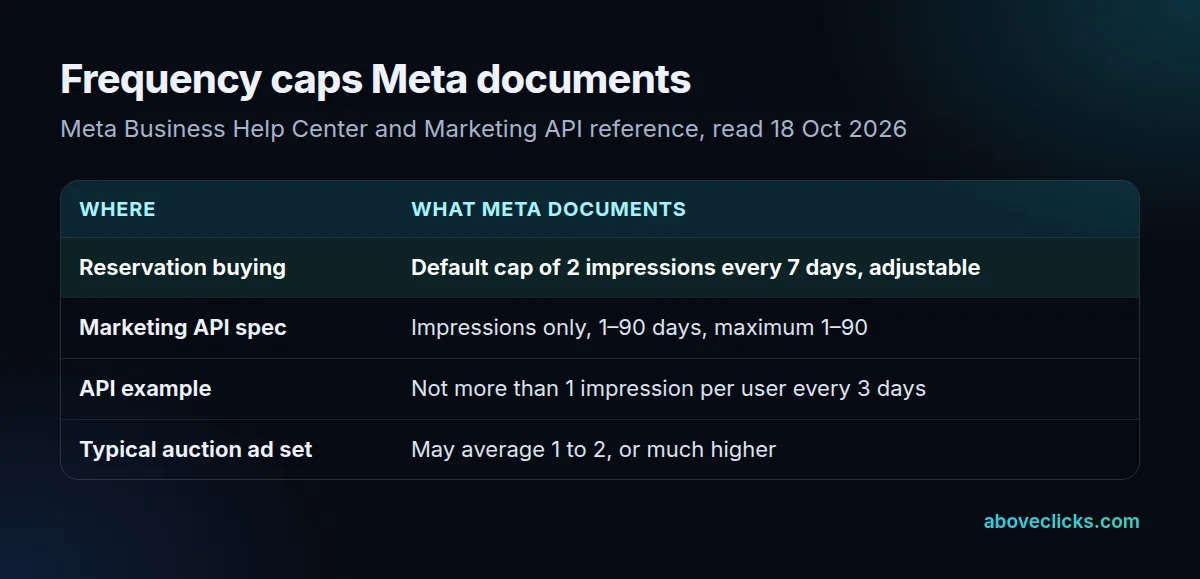
Meta’s frequency control spec shows how a frequency cap is defined: impressions only, over 1 to 90 days, with a maximum of 1 to 90. Its own example allows not more than 1 impression per user every 3 days. These 2 are the only frequency cap settings in the Meta pages we read. In an auction campaign for sales, the levers we cover are indirect: audience size, budget and how often you rotate new ads in.
Why does frequency climb in small audiences?
Because the budget has fewer people to spread over. A retargeting pool of site visitors is small, so the same daily spend reaches the same people again and again.
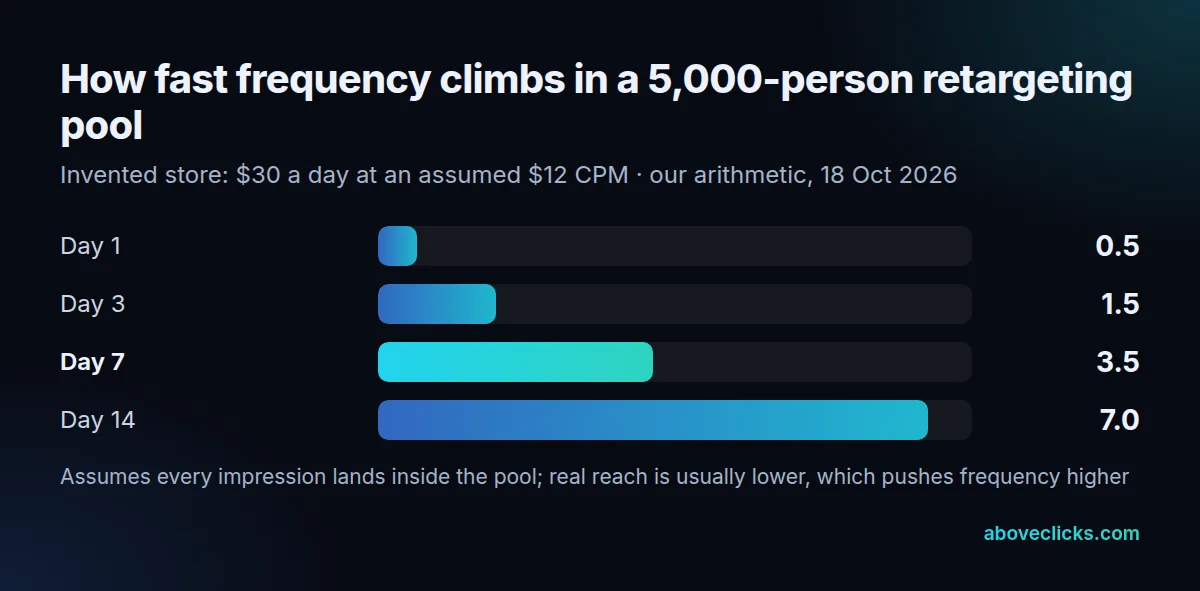
Take a hypothetical store sending $30 a day at a $12 CPM into a pool of 5,000 visitors: that’s 2,500 impressions a day, an average ad frequency of 3.5 after a week and 7.0 after 2 weeks. Check reach and ad frequency side by side over 7-day windows each week, so a rise shows up before cost per purchase moves. Then widen the pool with a longer visitor window or by adding people who engaged with your posts, lower the daily budget, or rotate new ads into that ad set. Our Meta ads management team watches this for stores, and the Meta ads for e-commerce guide covers retargeting structure.